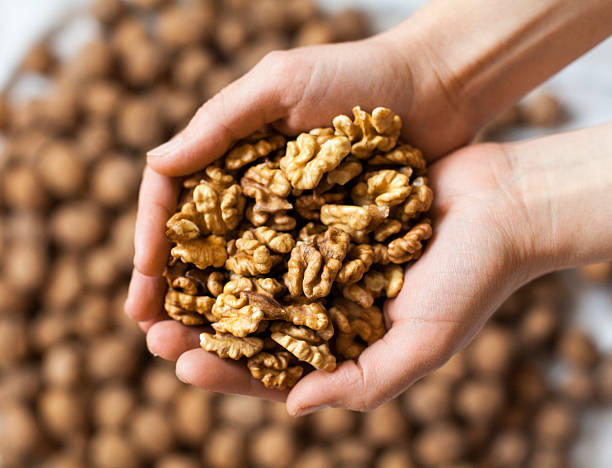
Walk down the snack aisle of any grocery store and you’ll find countless options promising more energy, better focus, or improved health. Yet one of the most powerful foods for healthy aging has been sitting quietly on the shelves for centuries – the walnut.
Maybe it’s no coincidence that walnuts resemble the human brain. Walnuts contain an impressive combination of nutrients that support both brain and heart health, making them one of my favorite foods for adults over 50.
As we age, protecting our cardiovascular system, preserving cognitive function, maintaining healthy cholesterol levels, and reducing chronic inflammation become increasingly important. Walnuts help address all of these areas through a unique blend of healthy fats, fiber, protein, vitamins, minerals, and antioxidants.
Why Walnuts Are Different
Unlike most other tree nuts, walnuts are an excellent source of alpha-linolenic acid (ALA), a plant-based omega-3 fatty acid. While ALA isn’t identical to the EPA and DHA found in fatty fish like wild salmon, it still plays an important role in supporting cardiovascular health and reducing inflammation.
Walnuts also provide protein to help preserve muscle, fiber to nourish the gut microbiome, magnesium to support muscles and nerves, copper and manganese for healthy metabolism, vitamin E and polyphenols that help protect cells from oxidative stress, and numerous other plant compounds that scientists continue to study.
Why This Matters After 50
One of the greatest challenges of aging is managing the gradual wear and tear that occurs throughout the body.
-Blood vessels become less flexible.
-Muscle mass slowly declines.
-The brain becomes more vulnerable to oxidative stress.
-Chronic low-grade inflammation may quietly contribute to many of the diseases we associate with aging.
No single food can stop these processes, but foods rich in healthy fats and antioxidants can help create an internal environment that supports healthier aging.
Several studies have linked regular nut consumption, including walnuts, with improved heart health, healthier cholesterol levels, and a lower risk of cardiovascular disease. Other research suggests that diets including walnuts may help support cognitive function as we grow older. While walnuts certainly aren’t a cure for memory loss, they fit beautifully into dietary patterns consistently associated with healthy brain aging.
More Than Just Healthy Fat
Many people avoid nuts because they’re calorie-dense. That’s understandable – walnuts do contain a significant amount of fat. However, the important detail is the type of fat.
Most of the fat in walnuts is unsaturated, the same family of heart-healthy fats found in foods like olive oil and avocados. These fats help promote satiety, meaning you’re often satisfied with a relatively small serving. In fact, replacing processed snacks such as chips, crackers, or cookies with a handful of walnuts may actually make it easier for many people to manage hunger throughout the day.
It’s another reminder that calories never tell the entire nutritional story.
Simple Ways to Add Walnuts to Your Day
One of the things I appreciate most about walnuts is how easy they are to incorporate into everyday meals. Sprinkle them over oatmeal or Greek yogurt at breakfast, toss them into salads for extra crunch, mix them with fresh berries for a satisfying afternoon snack, add chopped walnuts to roasted vegetables or whole-grain dishes, or simply enjoy a small handful on their own.
You don’t need a complicated recipe…sometimes the healthiest foods are also the simplest.
Dr. Edwards’ Take
I’ve never been particularly interested in chasing the newest “miracle supplement.” Every few months, there’s another product promising to reverse aging or unlock the secret to perfect health. Most of those promises disappear as quickly as they arrive.
Whole foods are different. Walnuts remind me why I continue to encourage people to build their health around real food rather than marketing claims. Inside one small handful are healthy fats, protein, fiber, magnesium, antioxidants, vitamins, minerals, and countless naturally occurring plant compounds that scientists are still discovering. Nature has been creating nutritional masterpieces long before we learned how to manufacture supplements.
Do walnuts guarantee a longer life? Of course not. But when I look at the eating patterns shared by many of the world’s healthiest populations, I repeatedly see simple foods like nuts, beans, vegetables, fruits, fish, and olive oil showing up again and again. That’s rarely an accident.
Healthy aging isn’t built by finding one magical food; it’s built by consistently choosing foods that nourish your body day after day. A handful of walnuts may seem like a small decision…over time, though, those small decisions become the foundation of a healthier life.
Comments
2 responses
Ya Lost me at Walnuts …. I am not a huge fan, well not a fan at all! So, on this one, I am not fully on board but appreciate all the info provided on why I SHOULD! lol, win some and lose some. Thanks Dr. Gene for the guidance but this is still a hard no for me!!
That is perfectly fine…lol. There is only one more superfood to go…maybe I can sell you on that one.